
curated by Claudia Praolini | reviews curated by Carola Visca
Ubik is an out-of-competition part of the festival, where the works with the most innovative language find their natural spot. Whereas the aim of short films experimenting new ways of expression has always been one of the core criterion for selecting and evaluating all the films competing at Concorto, the Ubik ones push the limit a bit further, in less-charted territories, where the border between cinema and video fades away. It is a kind of cinema which talks about itself, a cinema which turns its eye towards itself, revealing with no shame the mechanisms upon which video-recording is based. A kind of cinema which, conscious of its structures and language, decides to “unveil the trick”, but exactly thanks to this process, turns the viewing into opaque, as if meta-cinema were a lens which works the other way around, capable of blurring the layers of which reality is made and the experience of viewing itself.


The film selection
curated by Claudia Praolini
That’s all from me by Eva Könnemann
Non te vexo by Xacio Baño
Incident by Bill Morrison
Nafura by Paul Heintz
Reviews curated by Carola Visca
That’s all from me by Eva Könnemann
In this autofiction short film, director Eva Könnemann reflects on the difficulties of combining motherhood and artistic research in a fictional exchange of letters between a filmmaker in crisis and a writer, both mothers of different ages. By self-reflexively exposing her own visual and writing form, the short film offers a glimpse of a woman’s ambitions between the desire for freedom and social expectations. How can the mother and the artist coexist? The absolutist nature of motherhood emerges, a devotion to the other that leaves no room for the woman’s desire to progress artistically, somehow forcing her to make her condition the very object of her film. The frustration of nevertheless wanting to find an object of research outside of herself – something she has nothing to do with – will lead the director to measure herself, on the advice of the writer, against the simplicity of common life (the considerations of a birdwatching enthusiast) in that inexhaustible human confrontation to understand who we are and what is our place in the world.
Non te vexo by Xacio Baño
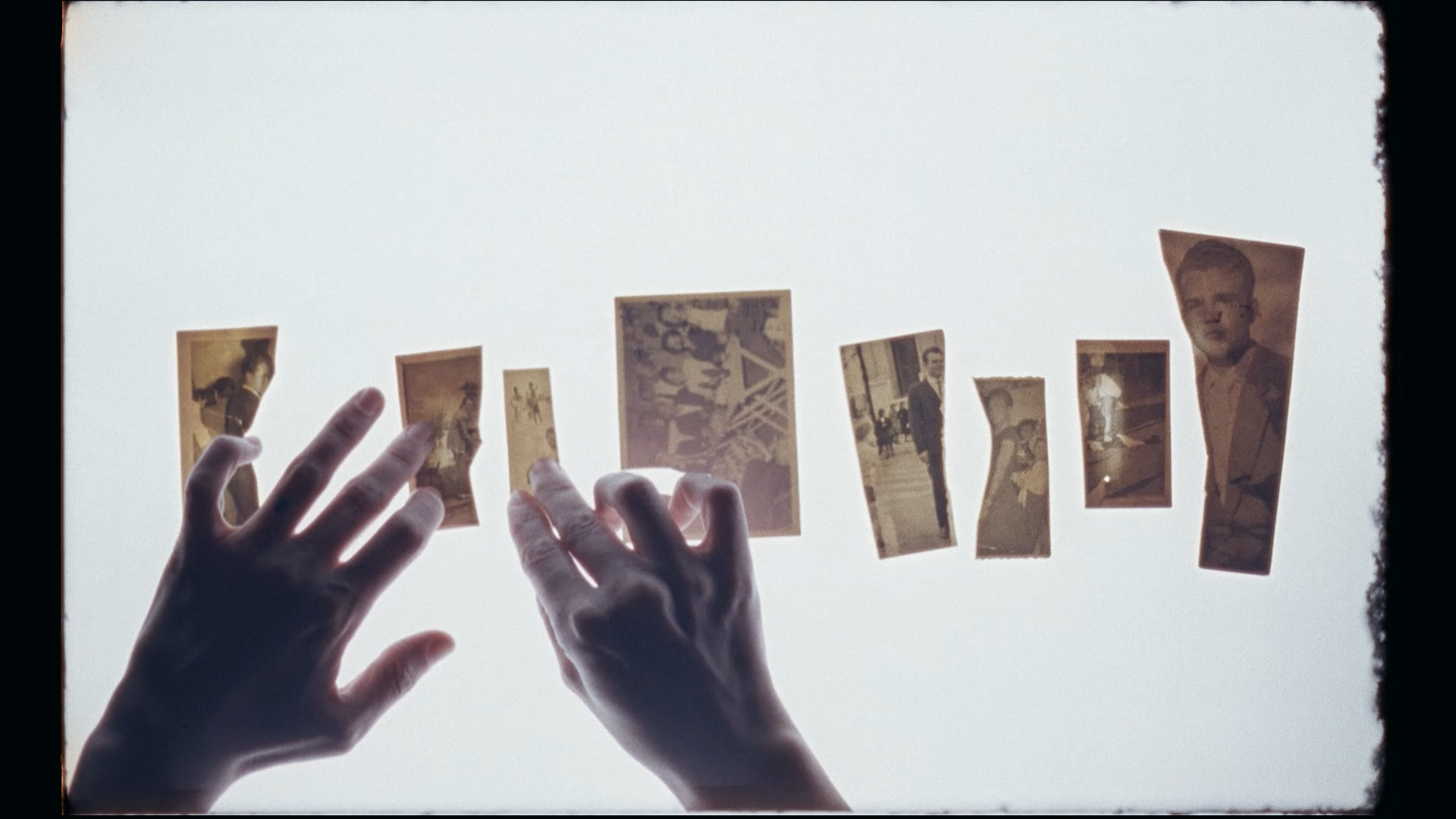
Non te vexo is a eulogy to photography by Spanish director Xacio Baño: with its its meditations, this video essay ranges from the materiality of images (the analogue/digital pair, double exposures, war postcards) to the uses that we make of them, exploring their link with memory and removal of the same. The perfect reproducibility of reality that has characterized photography from its beginnings as an art of ghosts – paradoxical figures somewhere between the presence of an object and the absence of its referent – directly links photographic practices to the arts of the past. The archives of memory are made up of photographs that we look at, touch and tear down, as if we could actually interact with what they represent. But photography, as the director tells us, has today ceased to be a document of presence and testimony of a past necessary to construct the present: contemporary images seem to lose cohesion with reality, in a radical dematerialization that makes any recognition impossible.
Incident by Bill Morrison
Experimental filmmaker Bill Morrison reconstructs in this found footage the murder of Harith Augustus, an African-American barber killed with several gunshots by Chicago police in July 2018. The film portrays a faithful narrative of the tragic events of yet another episode of American police brutality, thanks to the reconstruction of the different points of view provided by the footage of surveillance cameras and bodycams worn by the police officers. In this way, Morrison elevates the digital image to bear witness to the truth, while at the same time making it a device of the “surveillance society” against its own outposts. If the focus of his previous movies had mainly been on the materiality of the film (the decay of the filmic support and consequently of the image), while maintaining continuity in the use of archive material, Incident marks an important political turn in the director’s filmography with a gaze on the recent history of the United States.
Nafura by Paul Heintz
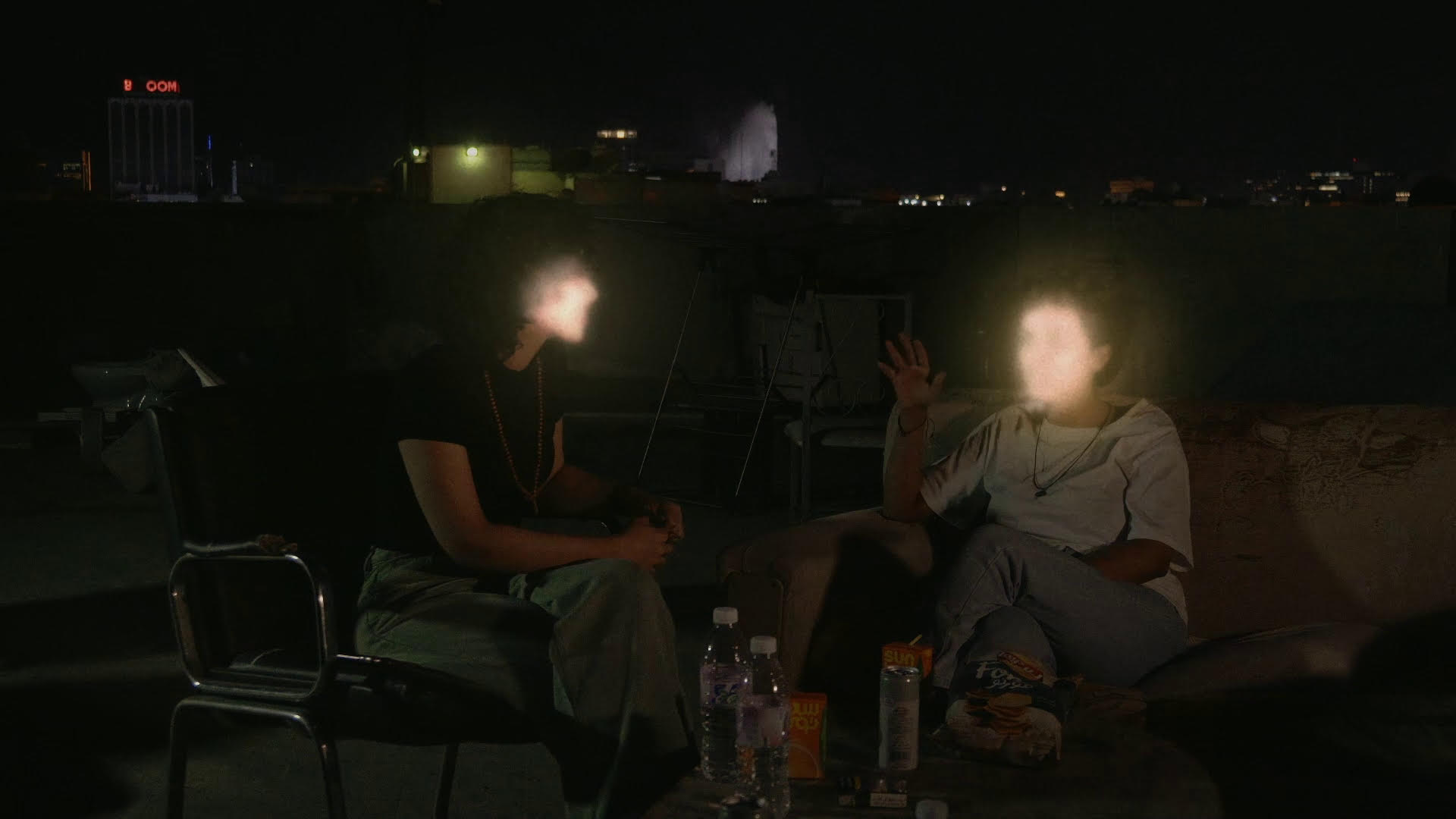
Between the oneiric and the real, Nafura by Paul Heintz is the road movie of a group of girls whose faces we never know, thanks to the application of luminous masks similar to spots that conceal their features. Set in Saudi Arabia, the protagonists’ nocturnal journey leads to the fountain of Jeddah, whose jet – the highest in the world – becomes a symbol of an authoritarian and masculine power that rises above a city dotted with luminous faces like those of the three main characters. In the game in which the three young women substitute taboo terms with the word ‘’nafura‘’ (fountain) , we discover the prohibitions against which they oppose a desire for freedom, which along the journey will be symbolically realized in the operation of turning off the fountain. Water and light are thus explored in their allegorical dimension through a journey of emancipation that alternates documentary-ish sequences with images suspended in a dream created with digital software.







Commenti recenti